A beginner home workout is a simple way to start exercising without joining a gym or doing high-impact movements. If you are looking for a workout for lazy beginners at home without jumping, this easy 10-minute routine can help you get started at your own pace. You do not need expensive equipment or a large space—just comfortable clothing and a little time to move.
Many people struggle to exercise regularly because they feel tired, lack motivation, or find intense workouts difficult. The good news is that you can begin with simple movements and gradually build a routine that fits your daily life.
In this guide, you will learn eight beginner-friendly exercises, how often to practise, tips for staying consistent, and how to make your home workout more comfortable.
Why Choose a Beginner Home Workout?
Starting with simple exercises can make fitness feel less overwhelming. You do not have to run, jump, or perform difficult movements to begin becoming more active.
A low-impact home workout may be a good starting point if you:
- Are new to exercise and want to start slowly.
- Prefer working out at home instead of going to a gym.
- Have limited space or no exercise equipment.
- Want a quieter workout without jumping.
- Need a routine that allows rest breaks.
- Want to develop healthier daily habits.
Low-impact exercises reduce jumping and pounding compared with many high-impact activities. However, not every exercise is suitable for everyone. Choose movements that match your abilities and comfort level.
Beginner Home Workout: 10-Minute Routine Without Jumping
This simple routine includes movements that you can perform in a small space. You will need comfortable clothing and a sturdy chair for support during some exercises.
The suggested timings are flexible. Rest whenever necessary, and start with fewer repetitions if you are new to physical activity.
1. March in Place — 2 Minutes
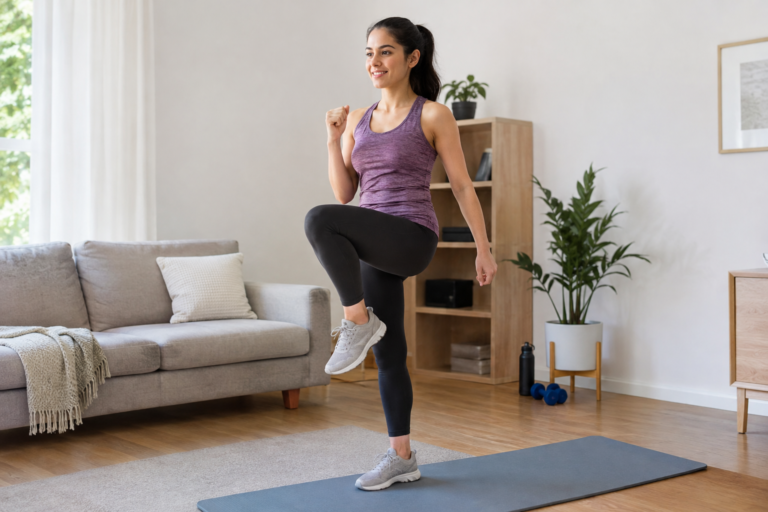
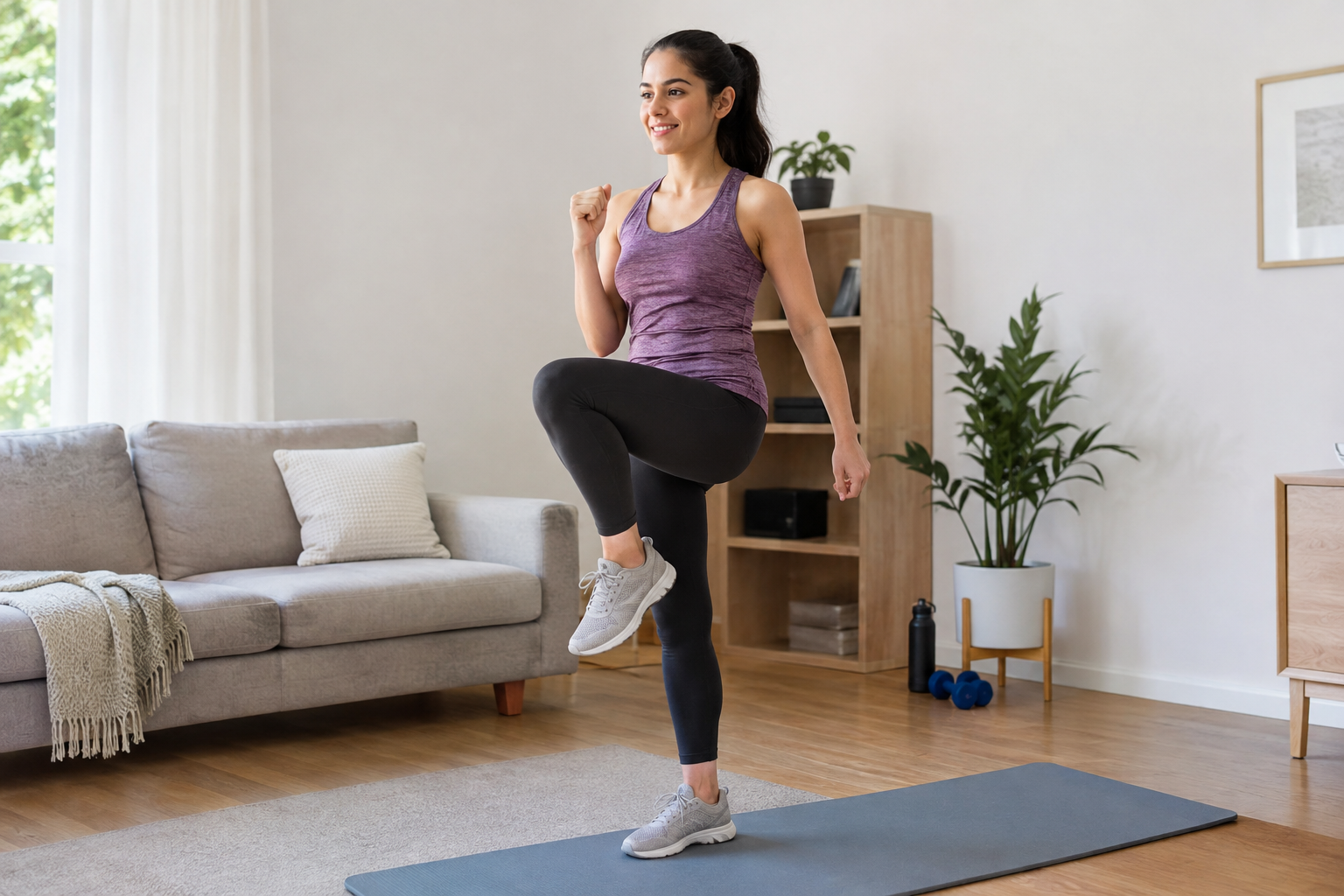
Marching in place is an easy way to begin moving without leaving your room.
How to do it:
- Stand with your feet comfortably apart.
- Lift one foot a few inches off the floor.
- Lower it gently and repeat with the opposite foot.
- Swing your arms naturally if comfortable.
- Continue at a manageable pace.
Start with small steps and use a stable support if you need help with balance.
2. Wall Push-Ups — 1 Minute
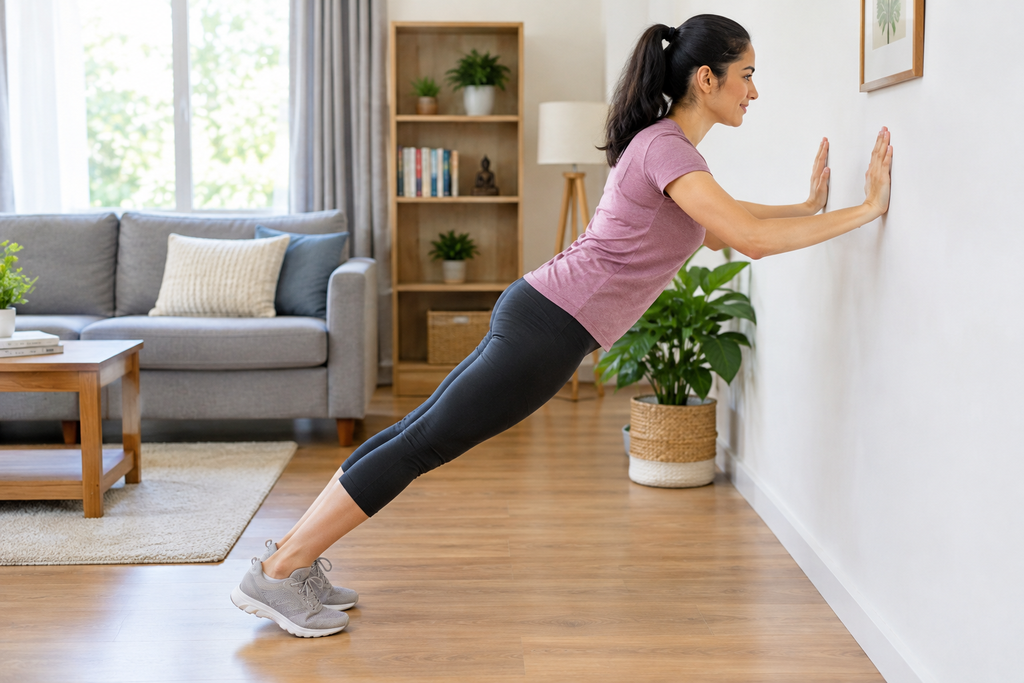
Wall push-ups are a beginner-friendly alternative to traditional floor push-ups.
How to do it:
- Stand facing a wall, approximately an arm’s length away.
- Place your palms against the wall at shoulder height.
- Bend your elbows and slowly move your chest towards the wall.
- Push gently back to the starting position.
- Repeat with controlled movements.
Begin with five to eight repetitions if comfortable. Take breaks when needed.
3. Chair Sit-to-Stands — 1 Minute
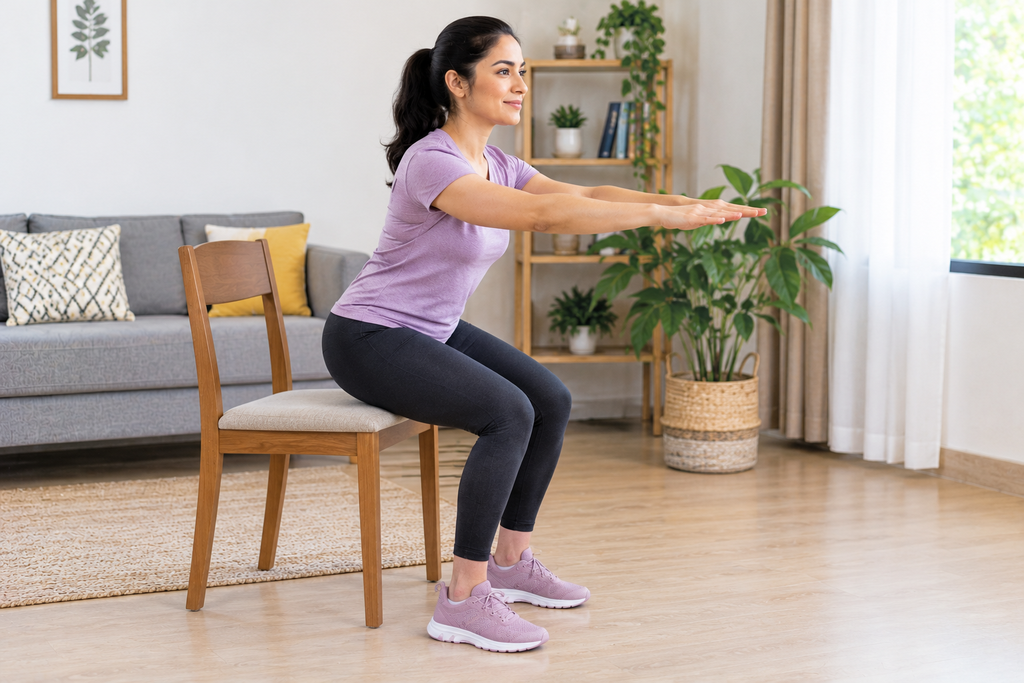
Chair sit-to-stands practise a movement used in everyday life.
How to do it:
- Place a sturdy, non-rolling chair against a wall.
- Sit with both feet flat on the floor.
- Lean forward slightly while keeping your back comfortable.
- Stand up slowly, using your hands for support if needed.
- Lower yourself back into the chair with control.
Start with three to five repetitions. If standing is uncomfortable, try gentle seated leg extensions instead.
4. Standing Side Leg Raises — 1 Minute
This exercise works the muscles around your hips and helps you practise balance.
How to do it:
- Stand beside a sturdy chair or countertop.
- Hold the support lightly.
- Keep your body upright and move one leg slowly out to the side.
- Bring it back without swinging.
- Repeat on the other side.
Try five repetitions per leg to start. Avoid leaning excessively or lifting your leg higher than feels comfortable.
5. Seated Knee Extensions — 1 Minute
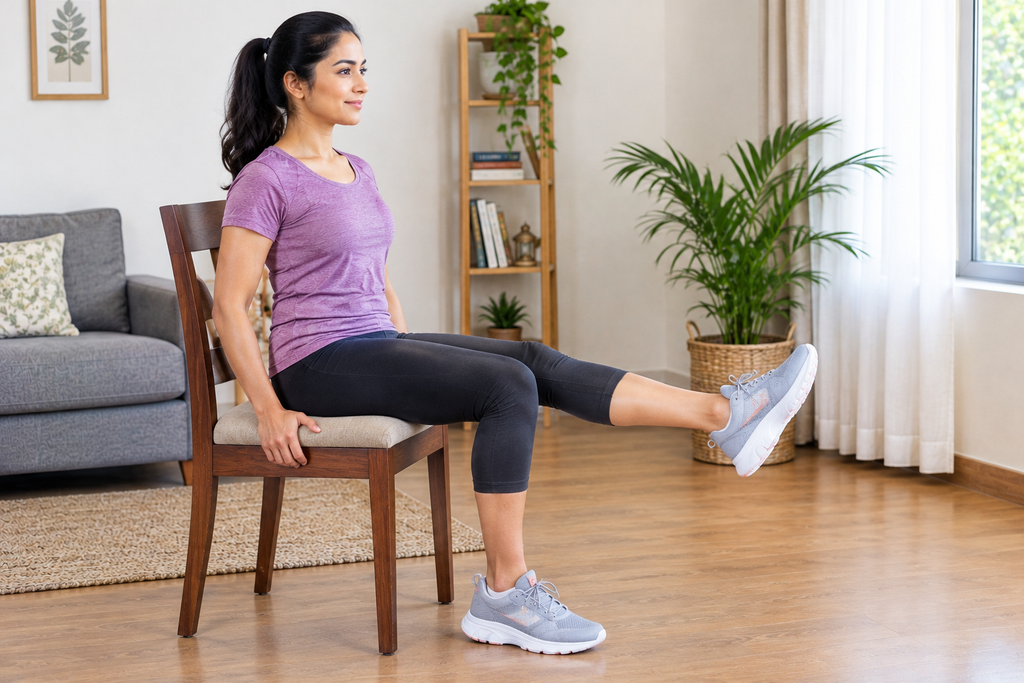
Seated knee extensions are an option if you prefer exercising while sitting.
How to do it:
- Sit upright in a sturdy chair with your feet on the floor.
- Slowly straighten one knee.
- Pause briefly without forcing the movement.
- Lower your foot back to the floor.
- Alternate legs.
Perform five to eight repetitions per side, taking breaks as needed.
6. Standing Calf Raises — 1 Minute
Calf raises involve lifting your heels while keeping your toes on the floor.
How to do it:
- Stand behind a sturdy chair.
- Place your feet about hip-width apart.
- Hold the chair for balance.
- Slowly lift your heels.
- Lower them gently.
Try five to ten repetitions without rushing. Stop if the movement causes pain or makes you feel unstable.
7. Gentle Side Steps — 1 Minute
Side steps provide another way to move without jumping.
How to do it:
- Stand with your feet comfortably apart.
- Step one foot sideways.
- Bring the other foot towards it.
- Repeat in the opposite direction.
- Continue with small, controlled steps.
Keep your pace comfortable and make sure you have enough clear floor space.
8. Gentle Cool-Down — 2 Minutes
Finish your beginner home workout with slow walking or marching in place. Follow this with gentle shoulder rolls and comfortable stretches.
Breathe normally and allow your movements to slow gradually. Avoid bouncing while stretching or forcing a movement that feels uncomfortable.
If you cannot manage the entire routine at first, begin with three to five minutes and increase your activity gradually.
How Often Should You Do a Beginner Home Workout?
If you are new to exercise, consistency is more important than doing a difficult routine on your first day.
Here is a flexible starting schedule:
- Week 1: Exercise for five to ten minutes, three days a week.
- Week 2: Continue for ten minutes on three or four days if comfortable.
- Week 3: Add a few repetitions or extend selected exercises slightly.
- Week 4: Continue progressing gradually and include gentle walking when possible.
Adjust the schedule to your abilities and allow time for recovery. These are suggestions, not strict requirements.
The American Heart Association’s home workout guide provides additional ideas for simple exercises you can perform at home.
Over time, healthy adults can work towards the general recommendation of 150 minutes of moderate-intensity aerobic activity per week, along with muscle-strengthening activities on at least two days. You do not need to reach this target immediately.
Can a No-Jumping Workout Help With Weight Loss?
A no-jumping workout can contribute to an active lifestyle, but it does not guarantee weight loss on its own.
Weight management depends on several factors, including your overall food intake, daily movement, sleep, health, and consistency over time.
If weight management is your goal, consider combining regular exercise with walking, balanced meals, and sustainable daily habits.
Avoid expecting dramatic results from a short workout. Focus on building consistency, improving your comfort with movement, and gradually increasing your activity.
Tips for Staying Consistent With Home Workouts
The best workout is one you can realistically repeat. A few simple changes can make it easier to stay active.
Choose a Convenient Time
Exercise when it fits naturally into your day. You might prefer moving after waking up, during a break, or before your evening shower.
Start With Just Five Minutes
If ten minutes feels difficult, begin with three to five minutes. Increase the duration as you become more comfortable.
Keep Your Workout Space Ready
Clear a small area so you can begin without rearranging your room. Keep a sturdy chair nearby if you need support.
Track Your Progress
Mark each completed session on a calendar. Focus on regular practice instead of judging every workout by calories burned.
Add Walking to Your Routine
Walking is another accessible way to become more active. Start with short walks and increase the duration gradually if comfortable.
You can also link this section to a related article on your website about a beginner walking plan.
Safety Tips Before You Exercise at Home
Before exercising, clear obstacles from your workout area, wear comfortable clothing, and use a stable chair for support when needed.
Move slowly and prioritise good technique over the number of repetitions. If you have been inactive for a long time, have an ongoing health condition, or need help choosing suitable exercises, consult a healthcare professional before starting.
Stop exercising if you experience chest pain, unusual shortness of breath, dizziness, or sharp pain, and seek appropriate medical attention.
For more guidance, read the MedlinePlus indoor fitness routine, which explains different components of a balanced exercise programme.
Frequently Asked Questions
1. Can beginners exercise at home without jumping?
Yes. Beginners can try low-impact movements such as marching in place, wall push-ups, and seated knee extensions. Choose exercises that match your abilities and start slowly.
2. Is a 10-minute home workout enough?
Ten minutes is a useful starting point for building an exercise habit. You may gradually need more activity to meet your personal fitness goals and general physical activity recommendations.
3. Can I exercise at home without equipment?
Yes. Many beginner exercises require no specialised equipment. You can use a sturdy chair for balance or support when appropriate.
4. Can a beginner home workout help with weight loss?
It can contribute to your overall physical activity, but weight management also depends on eating habits, daily movement, sleep, and individual health factors.
5. How often should beginners exercise?
Start with a manageable routine a few days per week and increase gradually as your fitness and comfort improve. Allow time for recovery when needed.
6. What if I cannot finish the workout?
Take a break, reduce the number of repetitions, or begin with three to five minutes. Increase your exercise time gradually instead of forcing yourself to finish.
7. Can I do this workout every day?
Some gentle movements may be suitable for frequent practice, depending on your health and recovery. Start with a manageable schedule and rest when needed.
Final Thoughts
A beginner home workout does not have to involve jumping, running, or exhausting exercise sessions. Simple movements can help you start building a more active lifestyle at your own pace.
Begin with a few minutes, choose exercises that feel comfortable, and increase your activity gradually. Focus on consistency rather than trying to do everything perfectly on the first day.
You do not need to become a fitness expert to get started. Choose a realistic routine, make time for movement, and keep progressing at a pace that works for you.
Health disclaimer: This article provides general educational information and is not a personalised medical or exercise prescription.
About the Author